Nigeria Built a Digital Currency. The Market Built a Better One
Nigeria launched Africa's first digital currency in 2021. Almost nobody uses it. Instead, ordinary Nigerians built a $92 billion stablecoin economy of their own — and now, just as the SEC moves to tighten the rules, the two are on a collision course.


On this page
As Nigeria's securities regulator moves to tighten stablecoin rules this week, the country has quietly become the world's largest stablecoin economy outside the US — while its own digital currency sits almost untouched.
In October 2021, Nigeria's central bank launched Africa's first digital currency. It was called the eNaira.
Four years on, almost nobody uses it. By 2025, the eNaira had grown to roughly 13 million registered wallets. The IMF has repeatedly found that the vast majority — as much as 98.5% — have never processed a single transaction.
A different digital dollar took hold instead. One the central bank never built, and for years actively resisted.
Nigeria is now the largest stablecoin economy outside the United States, moving roughly $92 billion in stablecoins on-chain between mid-2024 and mid-2025, according to Chainalysis data. Nearly 9 in 10 of those transactions run through Tether's USDT.
An IMF working paper published this June gave the trend a name: "digital dollarization." Nigeria, it said, is the leading case.
Why it happened
The trigger was policy, not ideology.
In 2023, the central bank collapsed its multiple exchange-rate windows into one. The naira lost value fast.
By November 2024, the dollar had hit an all-time high of nearly ₦1,718.
Inflation, which had hovered near 16% for a decade, averaged 23% across 2025.
For anyone paid or saving in naira, a dollar-pegged token was the obvious hedge.
The habit didn't reverse
By mid-2026, conditions had eased.
The naira gained almost 10% against the dollar over twelve months. Headline inflation cooled to 15.4% in July, the lowest reading since March.
Stablecoin volumes kept climbing anyway.
That's the real signal. This stopped being a panic trade some time ago. It's now infrastructure.
Traders use USDT to settle import and export invoices. Businesses hold it for cross-border payments that once took days through correspondent banks. Freelancers and remote workers get paid in it directly.
Review our comprehensive operational framework on cross-border payments in Africa to see how stablecoin pools bypass traditional clearing friction entirely, enabling people and businesses to send money to Nigeria
The remittance math Abuja can't ignore
Nigeria's diaspora sent home close to $23 billion through official channels in 2025 — one of the largest inflows anywhere on the continent.
The central bank wants more of that money moving through banks, not informal channels. Governor Olayemi Cardoso has set a target of $1 billion a month in formal remittances by the end of 2026. July's figure hit $947 million, up from around $600 million earlier in the year.
But one new rule cuts against that goal.
On May 1, 2026, the central bank ordered every licensed money-transfer operator — Western Union, MoneyGram, Remitly, and the rest — to pay recipients only in naira, converted at the official rate. Dollar payouts are gone.
That removes the one feature that made formal remittances genuinely competitive with stablecoins: the ability to actually hold dollars. Send USDT instead, and the recipient still can.
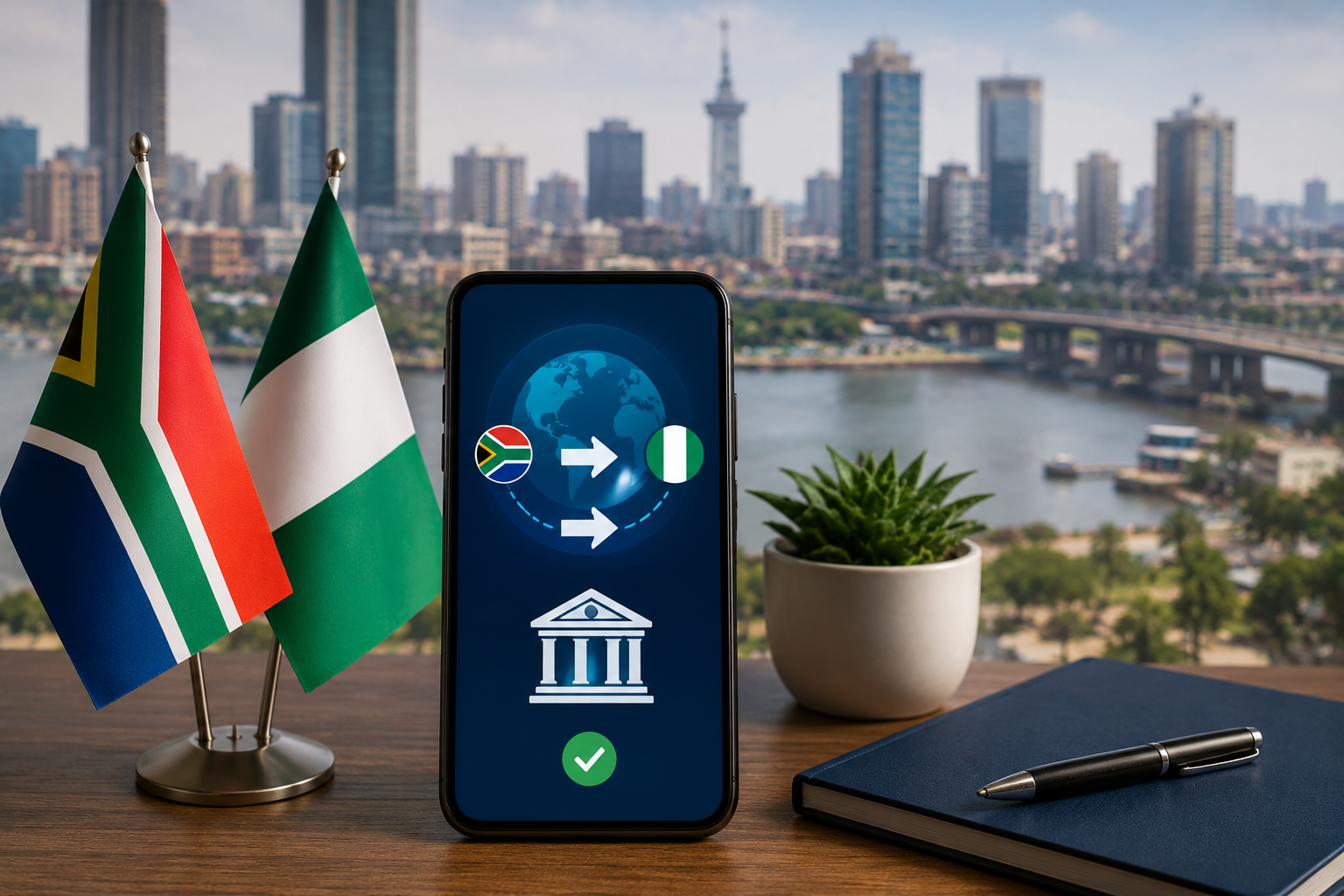
Senders managing regional corporate corridors can track exchange-rate spreads and clearing networks in our master playbook on sending money from South Africa to Nigeria to optimize outbound values
Tightening rules on a market that already won
Regulators haven't ignored any of this.
Under the 2025 Investments and Securities Act, Nigeria's Securities and Exchange Commission now treats stablecoins as securities. Exchanges need a license. Issuers must hold full reserves, verified by regular audits.
On August 20, the SEC went further. Its draft rules would bar any foreign-currency stablecoin from being listed or held by consumers unless that specific token wins individual SEC approval. The industry has until this Thursday, September 3, to respond.
New licensing rules also set a capital floor of ₦2 billion for exchanges and custodians.
There's a familiar risk here. Nigeria's 2021 ban on bank-crypto links didn't stop stablecoin use.
It pushed activity into peer-to-peer trading instead, harder for anyone to see or measure. Tighter rules today could repeat that pattern.
At the same time, the SEC has floated a much bigger ambition: turning Nigeria into a stablecoin hub for the wider Global South.
Which version wins — a licensed hub, or an even bigger shadow market — likely depends on how these rules land.
The bottom line
Nigeria didn't design its own dollar economy. It arrived anyway, built by traders, freelancers, and families simply moving money the fastest way they could find.
The eNaira proved that issuing a digital currency isn't enough. People have to want to use it.
USDT proved the opposite. Nobody had to be convinced. It just worked.
If you are looking to hedge against local currency devaluation using regulated digital asset gateways, you can buy crypto instantly via the main Finlazo infrastructure terminal.