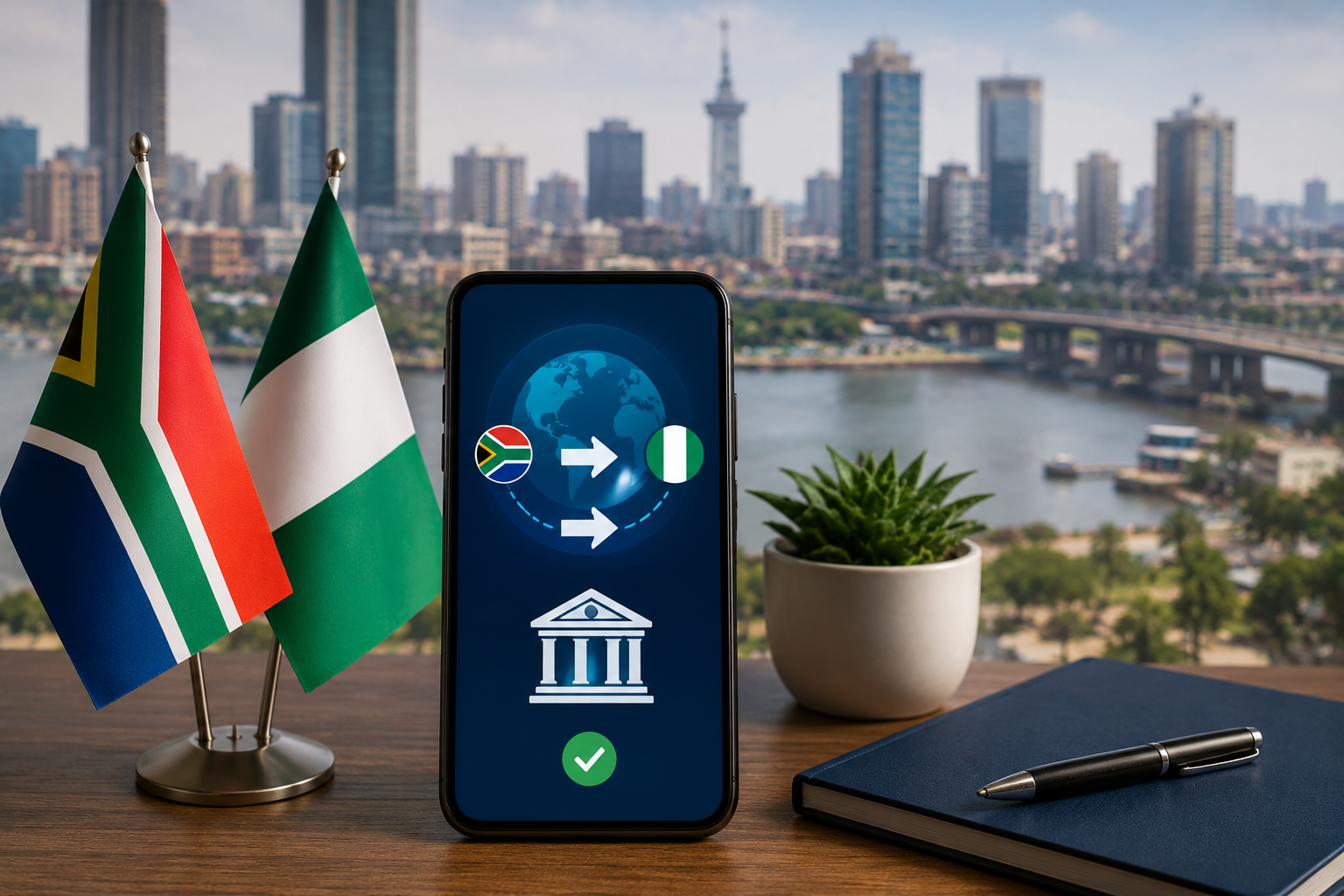
Cross-Border Payments in Africa: Why the Continent Needs Better Payment Infrastructure
Africa's digital payments are booming, but fragmented currencies, payment networks and regulations still make cross-border transfers costly and complex. Explore how PAPSS, fintechs, local payment rails and stablecoins could connect Africa's financial systems.

On this page
Africa is not waiting for the digital-payments revolution. It is already living through one.
In 2025, mobile-money services processed more than $2 trillion in transactions globally, with Sub-Saharan Africa remaining the world's dominant mobile-money region. In 2024 alone, mobile-money transactions in Sub-Saharan Africa were valued at approximately $1.1 trillion, representing nearly 65% of global mobile-money transaction value.
The broader digital economy is becoming equally significant. Mobile technologies and services contributed an estimated $240 billion to Africa's economy in 2025, equivalent to 7.8% of the continent's GDP, according to the GSMA.
Yet there is a striking contradiction at the heart of Africa's payment infrastructure: Moving money within many African countries can be almost instant. Moving it across African borders can still be complicated, expensive and slow.
A Kenyan business paying a supplier in Nigeria may have to navigate different currencies, banking systems, payment networks, foreign-exchange processes and regulatory requirements. A Nigerian professional sending money to Kenya can encounter the same fragmentation. A South African company expanding into East Africa may discover that having an advanced domestic payment system does not automatically provide seamless access to another African market.
The problem is therefore not that Africa lacks digital-payment infrastructure. Africa has built a remarkable amount of it. The continent has mobile-money ecosystems processing trillions of dollars, domestic instant-payment networks, fintech platforms, digital banks and emerging regional payment infrastructure. The challenge is interoperability.
Africa has 41 currencies, and Afreximbank has identified currency fragmentation and limited convertibility as major obstacles to intra-African trade.
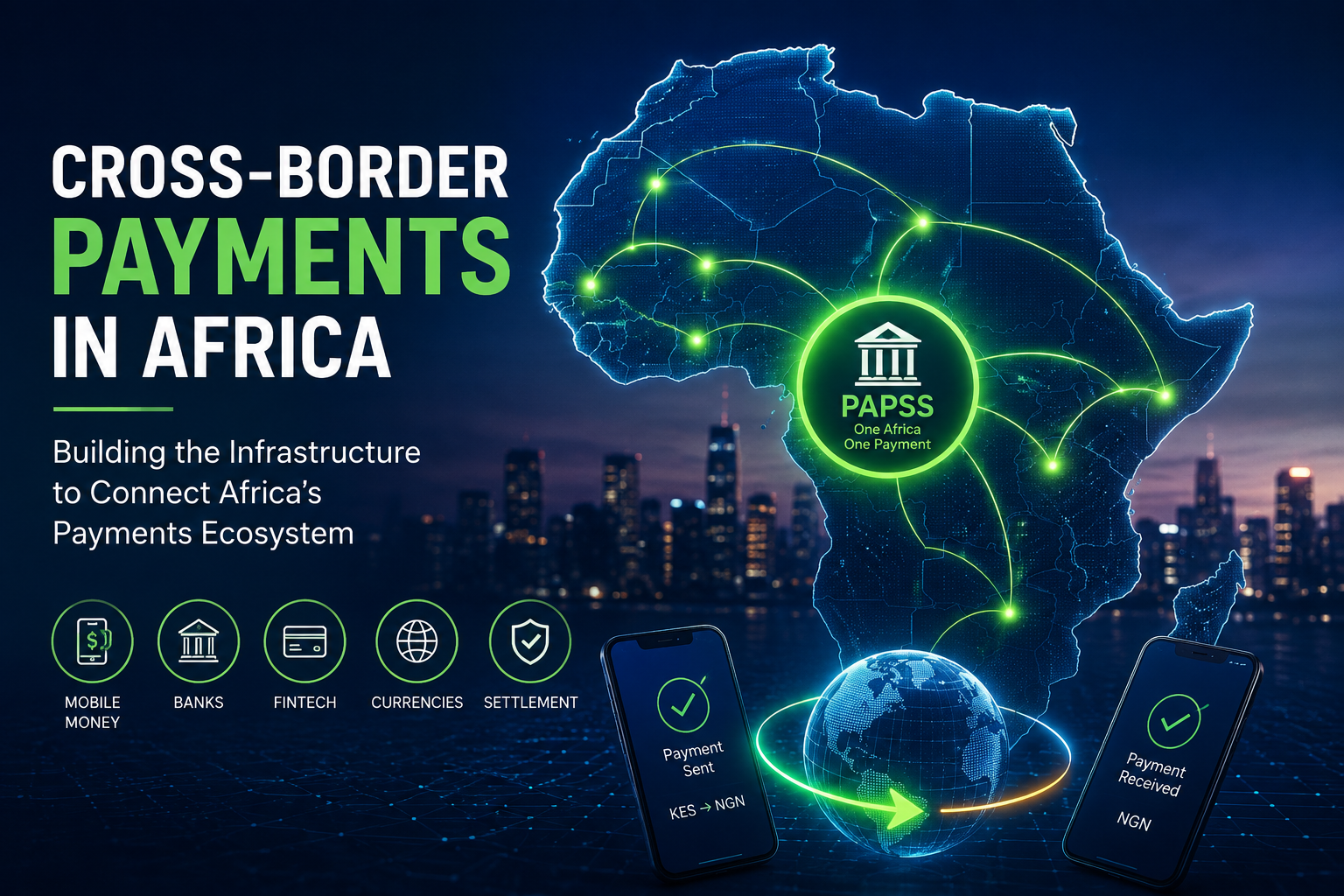
That is why initiatives such as the Pan-African Payment and Settlement System (PAPSS) are becoming increasingly important. In February 2026, PAPSS partnered with Kenya's PesaLink, connecting more than 80 PesaLink participants with more than 160 PAPSS participating banks and enabling instant 24/7 cross-border payments into Kenya in local currencies.
The direction of travel is becoming clear. Africa does not necessarily need another isolated wallet or another domestic payment app. It needs to connect the wallets, banks, mobile-money networks, instant-payment systems, currencies and settlement infrastructure that already exist. And that may be the next major chapter in Africa's digital-payment story: Not building more payment islands—but building the bridges between them.
The Scale of Africa's Cross-Border Payment Opportunity
Africa's payment market is already enormous. McKinsey estimated that Africa's electronic-payments market generated approximately $24 billion in revenue in 2020, with the broader e-payments market projected to approach $40 billion in annual domestic-payment revenue by 2025. The research also identified cross-border payments as an important part of the continent's broader payments opportunity.
The market has continued evolving since that research was published. Mobile money, fintech applications, bank APIs, instant-payment infrastructure and digital wallets have all expanded the ways Africans can move money.
But the development has been uneven. Africa has 54 countries, numerous currencies and highly different financial and regulatory systems. A payment method that works almost instantly in Kenya does not automatically work in Nigeria. A bank transfer in South Africa does not automatically settle into a Tanzanian mobile-money wallet. And a business cannot simply assume that a domestic payment licence in one country gives it permission to provide payment services throughout the continent.
The infrastructure therefore remains fragmented.
Why Cross-Border Payments Are Harder Than Domestic Payments
Domestic payments are relatively straightforward because the sender and recipient generally operate inside the same financial system. Consider a Kenyan domestic transfer: KES → Kenyan payment network → Kenyan recipient. The currency is the same. The regulator is familiar. The banking system is domestic. Settlement infrastructure is domestic.Cross-border payments introduce additional layers: KES → FX conversion → cross-border network → compliance checks → settlement → NGN
For a Kenya-Nigeria transaction, for example, the sender and recipient may interact with:
- Two currencies
- Two banking systems
- Two regulatory environments
- Different payment networks
- Different KYC requirements
- Foreign-exchange controls
- Correspondent institutions
- Different settlement processes
Every additional layer can introduce cost, delay and operational complexity. That is why building a genuinely pan-African payment system is considerably harder than building another domestic wallet.
Africa's Currency Fragmentation Is a Structural Problem
One of the biggest obstacles is currency fragmentation. Afreximbank and PAPSS have highlighted that Africa's financial landscape involves 41 currencies, creating significant challenges around convertibility and intra-African trade.
That creates a fundamental problem. Imagine a company in Kenya purchasing goods from Nigeria. The buyer has: KES. The seller wants: NGN. But there isn't always a simple direct KES/NGN settlement mechanism available through traditional banking infrastructure. The transaction may therefore involve additional intermediaries and foreign currencies.
Historically, the U.S. dollar has often played an important role in international African transactions. That creates another layer: KES → USD → NGN rather than KES → NGN. Every additional conversion can introduce an exchange-rate spread, liquidity requirement or settlement cost.
Correspondent Banking Adds Another Layer
Traditional international payments frequently rely on correspondent banking relationships. A simplified transaction can look like: Customer's local bank → correspondent bank → intermediary → recipient's bank. Each institution has its own:
- Compliance procedures
- Operating hours
- Fees
- Settlement processes
- Risk policies
This architecture works, but it was not designed specifically for today's instant digital economy. A consumer accustomed to sending money instantly through mobile money may find it strange that an international transfer can still take much longer.
For businesses, the problem is even more significant. A delayed supplier payment can affect:
- Inventory
- Cash flow
- Payroll
- Trade
- Working capital
- Customer delivery
Cross-border payment infrastructure is therefore not simply a convenience. It is economic infrastructure.
The Cost of Sending Money to Africa Remains High
The World Bank's Remittance Prices Worldwide database continues to show significant costs associated with international transfers. The World Bank's Q3 2025 data puts the global average cost of sending remittances at 6.36%.
Sub-Saharan Africa remains one of the most expensive regions for receiving remittances. World Bank data has placed the average cost of sending $200 to Sub-Saharan Africa around 7.9% in the relevant reporting period. That means sending $200 can cost roughly: $200 × 7.9% = $15.80 before considering the broader economic effects of delays, exchange-rate spreads or access costs.
The World Bank has also noted that cutting remittance costs by five percentage points could save senders and recipients globally up to $16 billion annually. That gives some indication of the economic value of reducing payment friction.
The Problem Is Bigger Than Remittances
Cross-border payments are often discussed in the context of migrant remittances. But remittances represent only one part of the market. Businesses need to move money across borders for:
- Imports
- Exports
- Supplier payments
- Contractor payments
- Payroll
- E-commerce
- Travel
- Education
- Healthcare
- Professional services
- Investment
- Treasury management
The growth of African digital commerce makes this increasingly important. A Kenyan software company can sell services to a Nigerian customer. A Ghanaian merchant can source inventory from Egypt. A South African company can employ contractors in Kenya. A Nigerian startup can purchase software from a company in Europe while paying African employees locally. The payment infrastructure needs to support all of these flows.
PAPSS Is Building a Different Model
One of the most significant developments in African cross-border payments is the Pan-African Payment and Settlement System (PAPSS). PAPSS was developed by Afreximbank in collaboration with the African Union Commission and the AfCFTA Secretariat to enable faster cross-border payments in African currencies.
The concept is important because it aims to reduce some of the friction associated with traditional correspondent banking and foreign-currency settlement. Instead of requiring every African transaction to pass through a major global currency, PAPSS is designed to facilitate transactions using participating African currencies. That is a major infrastructure change.
PAPSS Is Expanding Across the Continent
The network has been expanding rapidly. By the end of 2024, Afreximbank reported that PAPSS had reached 16 central banks and 150 commercial banks across Africa.
In July 2025, Morocco became the 17th country of presence in the PAPSS network. Algeria subsequently became the 18th country of presence in August 2025. And the network continued expanding in 2026.
In July 2026, the Bank of Central African States (BEAC) joined PAPSS.. Because BEAC serves the six CEMAC countries, its participation creates an important connection between PAPSS and Central African payment infrastructure. This is significant because PAPSS is no longer simply an East or West African initiative. Its network is increasingly becoming continental.
Kenya Is Becoming Part of This Infrastructure
Kenya's involvement is particularly interesting. In February 2025, KCB Group launched PAPSS integration in Kenya, becoming the first Kenyan bank to integrate the system. Bank of Kigali simultaneously launched PAPSS in Rwanda.
Then in February 2026, PesaLink partnered with PAPSS. The partnership connected more than 80 PesaLink network participants with more than 160 PAPSS participating banks, with the stated goal of enabling instant 24/7 cross-border payments into Kenya in local currencies.
This is exactly the direction African payment infrastructure needs to move. Instead of asking customers to navigate a complicated international banking chain, payment infrastructure can increasingly connect: Local payment network → regional payment network → local recipient, while settling in local currencies.
The Next Challenge Is Not Just Connectivity
Connecting payment networks is necessary. But it is not sufficient. A genuinely scalable cross-border payment system needs to solve several problems simultaneously.
Currency conversion - The system needs reliable liquidity between currencies. Compliance - Payments need to satisfy AML, KYC, sanctions and local regulatory requirements. Settlement - Financial institutions need reliable mechanisms for settling obligations between themselves. Identity - The system needs to know who is sending and receiving funds. Fraud prevention - Instant payments can also mean instant fraud if controls are weak. Reliability - A cross-border payment system cannot afford frequent downtime. Pricing - The service needs to be cheaper than traditional alternatives. User experience - The customer should not have to understand the complexity underneath the transaction.
This is why cross-border payments are ultimately an infrastructure problem, not merely an app-development problem.
Stablecoins Are Adding Another Layer to the Market
Traditional payment infrastructure isn't the only technology being developed. Stablecoins are increasingly being explored as a settlement mechanism for international payments.
McKinsey estimates that global stablecoin-linked card spending reached approximately $4.5 billion in 2025, up 673% from 2024. It also estimates that B2B stablecoin payments accounted for approximately $226 billion, around 60% of global stablecoin payment volume.
Africa's current share of measured stablecoin payment activity remains relatively small compared with Asia, North America and Europe. McKinsey estimates that Africa accounted for less than $1 billion of the stablecoin payment volume it analyzed. That does not necessarily mean stablecoins are irrelevant to Africa. Quite the opposite.
It may indicate that Africa represents a large future opportunity rather than an already-saturated market. Stablecoins can potentially provide an additional settlement layer between fragmented local payment systems. A simplified architecture could look like: Kenyan shilling → local payment rail → stablecoin settlement → Nigerian payment rail → Nigerian Naira
The customer doesn't necessarily need to hold the stablecoin. The stablecoin can operate as an infrastructure layer between the two fiat systems. That distinction is important. Stablecoins do not have to replace local currencies. They can potentially help move value between local currencies.
See Why Stablecoins Could Transform Cross-Border Payments in Africa
Local Payment Rails and Global Liquidity Can Complement Each Other
Africa does not necessarily need to choose between traditional payment infrastructure and blockchain infrastructure. The future may involve both. Consider a hypothetical Kenya-to-Nigeria payment: Customer's local payment method → Kenyan payment provider → liquidity / settlement layer → Nigerian payment provider → customer receives NGN.
The settlement layer could involve: - Correspondent banking - PAPSS - Stablecoins - FX liquidity providers - Other regulated settlement infrastructure
The important thing is not the technology itself. The important thing is that the customer experiences: Fast + affordable + transparent + reliable settlement.
Why Businesses Need Better Cross-Border Payments
For consumers, payment friction is frustrating. For businesses, it can become expensive. Imagine an African company importing goods. If a supplier payment takes several days, the importer may need additional working capital. If the exchange rate changes while the transaction is settling, the final cost can change. If compliance reviews delay the transfer, goods may remain stuck. If the payment provider charges multiple intermediary fees, margins fall.
These costs can make cross-border trade less competitive. Better payment infrastructure can therefore support intra-African trade itself. That is one reason PAPSS is closely linked to the implementation of the African Continental Free Trade Area.
Better Payments Could Support AfCFTA
The African Continental Free Trade Area is intended to increase trade integration across the continent. But trade agreements cannot solve payment friction by themselves. A company can have the legal right to sell to another African country and still struggle to:
- Invoice customers
- Receive payment
- Convert currency
- Pay suppliers
- Repatriate funds
Payment infrastructure is therefore one of the practical foundations of regional trade. Afreximbank has described PAPSS as part of the infrastructure supporting AfCFTA and has emphasized its potential to reduce reliance on foreign currencies and make intra-African trade more efficient.
The relationship is straightforward: More trade → more cross-border payments and: Better cross-border payments → less friction for trade.
Africa Has Already Proven That It Can Leapfrog in Payments
There is an important reason to be optimistic. Africa has already demonstrated that it does not necessarily need to follow the exact payment development path taken by Europe or North America.
Mobile money is perhaps the clearest example. Kenya's mobile-money ecosystem demonstrated that consumers could adopt digital financial services without first becoming traditional bank customers. The lesson is broader: Africa can build around the technology people actually use.
The next leap could be cross-border interoperability. Instead of recreating every component of a traditional international banking system, African payment providers can potentially connect: Mobile money + banks + instant-payment networks + fintech APIs + stablecoin liquidity + local settlement into a unified experience.
The Future May Be Invisible to the Customer
The best cross-border payment infrastructure may eventually become almost invisible. A customer should not have to know:
- Which bank settled the transaction
- Which liquidity provider converted the currency
- Which network carried the payment
- Which compliance engine screened it
- Which settlement asset was used
They should simply know: “I sent money. The recipient received it.” That is the standard domestic digital payments have already established. Cross-border payments need to reach the same level of simplicity.
What Needs to Happen Next?
- More payment-network interoperability - Domestic systems need to connect across borders.
- Better FX liquidity - African currencies need deeper and more efficient liquidity markets. Harmonized regulation - Different regulatory requirements can make regional expansion unnecessarily complicated.
- Better digital identity - Reliable identity infrastructure can improve both compliance and user experience.
- More real-time settlement - Businesses increasingly expect payments to move as quickly as information.
- Stronger fraud controls - Instant payments require equally sophisticated fraud detection. Competition - Multiple providers should be able to build on common infrastructure. - Better SME access - Cross-border infrastructure should not be designed only for multinational corporations.
Several pieces need to develop together.
Small African businesses should be able to use it too.
The Opportunity for African Fintechs
The fragmented nature of Africa's financial systems creates a challenge. But it also creates an enormous opportunity. A fintech does not necessarily need to replace the banks. It can connect them.
It does not necessarily need to replace mobile money. It can connect mobile-money networks. It does not necessarily need to replace local currencies. It can make moving value between those currencies easier. And it does not necessarily need to make stablecoins the customer-facing product.
Stablecoins can simply become part of the settlement infrastructure underneath the user experience. This is where the next generation of African payment companies could become particularly interesting.
The Future of Cross-Border Payments in Africa
Africa's cross-border payment problem is not caused by a lack of innovation. It is caused by fragmentation. The continent has:
- Innovative mobile-money systems
- Fast domestic payment networks
- Growing fintech ecosystems
- Increasing stablecoin adoption
- Regional payment initiatives
- Expanding digital banking
- Growing e-commerce
- A massive need for cross-border trade
The missing piece has increasingly been interoperability. PAPSS is one major attempt to solve that problem. Local payment networks such as PesaLink are another. Stablecoins and blockchain-based settlement systems represent another emerging layer.
The most successful infrastructure may ultimately combine several of these technologies rather than choosing only one. The future could therefore look less like: Bank vs. fintech or Fiat vs. crypto and more like: Local rails + global liquidity + interoperable settlement.
Conclusion
Africa does not need another isolated payment system. It needs better connections between the systems it already has. The continent's fragmented currencies, regulatory environments and financial networks have historically made cross-border payments slower and more expensive than they should be.
But the infrastructure is changing. PAPSS is expanding across African markets. Kenya's PesaLink is connecting into the system. Stablecoins are developing into a potential settlement technology. Digital payment adoption continues to grow. The opportunity is therefore much bigger than simply making transfers faster.
Better cross-border payment infrastructure can make it easier for African businesses to trade with one another, for families to move money, and for digital financial services to operate across borders. The next chapter of African payments may not be about building another financial network. It may be about connecting all the networks that already exist.
Explore regional Kenya's Cross-Border Payments analysis