Digital Payments and Financial Inclusion in Africa: What the Data Shows
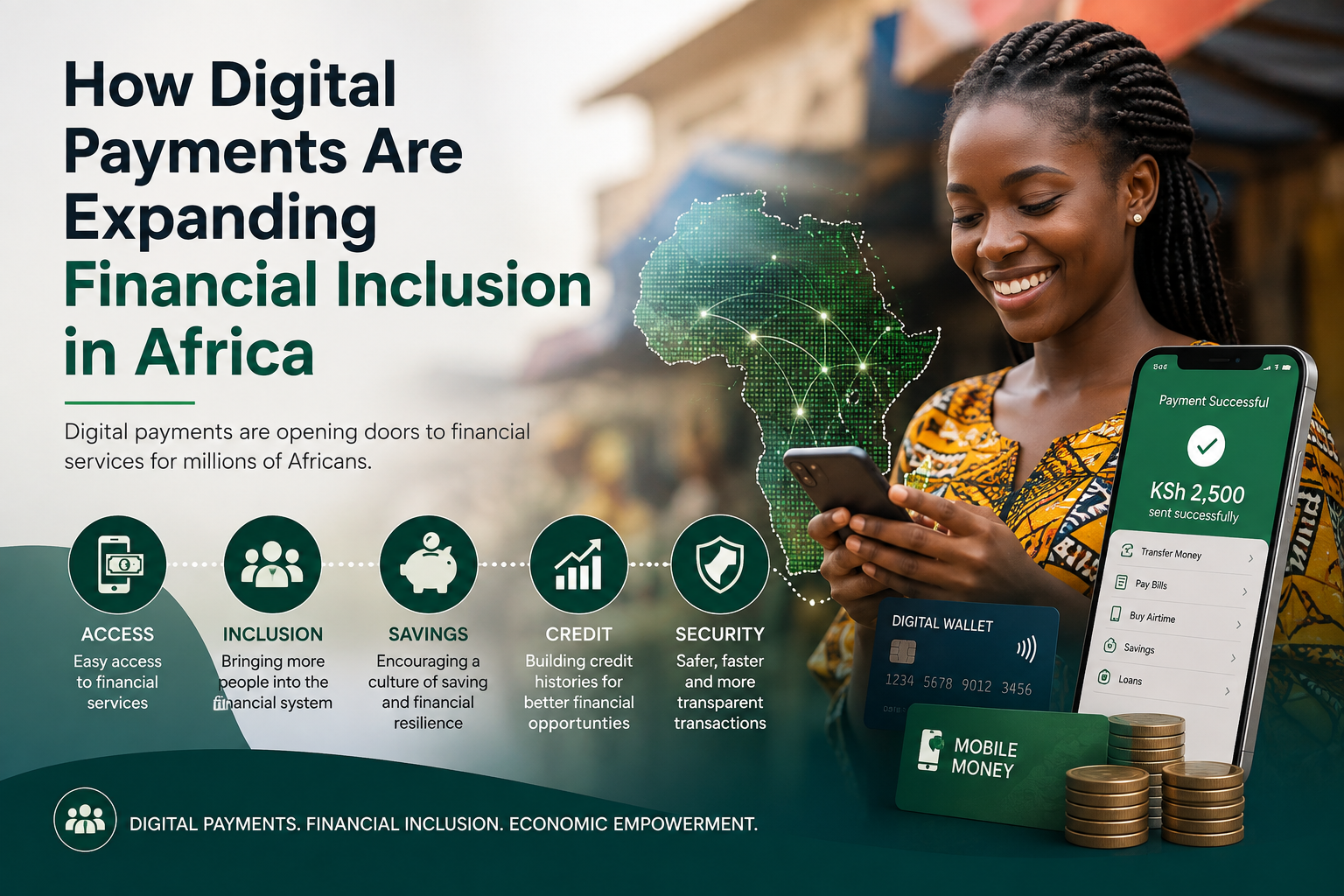
Digital payments are expanding financial inclusion across Africa, giving millions access to mobile money, digital accounts, savings and other financial services while reducing reliance on cash.

On this page
Africa's digital-payment transformation is no longer a prediction. It is measurable at population scale.
The World Bank's 2025 Global Findex data shows that 58% of adults in Sub-Saharan Africa had an account in 2024, up from 49% in 2021 and just 23% in 2011. Mobile money has been one of the biggest drivers of that transformation: 40% of adults in the region had a mobile-money account in 2024, compared with 27% in 2021.
But the regional average hides some extraordinary markets. In Kenya, 90.1% of adults had an account in 2024, compared with 42.3% in 2011. 87.5% had a mobile-money account, while 89.3% made or received a digital payment during the previous year.
And yet Africa is still far from becoming a cashless continent. The World Bank reports that millions of adults across Sub-Saharan Africa continue to make or receive common payments in cash, while digital merchant payments remain significantly less widespread than account ownership.
This creates one of the most interesting contradictions in African finance: Africa has some of the world's most advanced mobile-money markets while still having enormous room to digitize everyday payments. The next phase of the transformation is therefore not simply about getting people accounts. It is about getting those accounts used for payments, commerce, savings, wages, remittances and business transactions.
Africa Has Already Leapfrogged Traditional Banking
For decades, financial inclusion was largely measured by whether people had access to a bank branch. That model has changed. Mobile phones have allowed financial services to reach people without requiring a traditional branch network.
The World Bank's 2025 Global Findex found that 58% of adults in Sub-Saharan Africa owned an account in 2024, representing a substantial increase from 49% in 2021. The mobile-money revolution is central to that progress.
Sub-Saharan Africa remains the world's leading region for mobile-money adoption, with 40% of adults holding a mobile-money account in 2024. This matters because mobile money does something traditional banking infrastructure often struggles to do: It puts a financial account in the hands of someone who may never have lived near a bank branch. A mobile phone can become:
- A payment instrument - A savings mechanism - A remittance channel - A merchant-payment tool - A way to receive wages - A way to receive government payments - A bridge into other financial services The result is a different path to financial inclusion.
Kenya Shows What Digital Payment Adoption Can Become
Kenya is one of the clearest examples of this transformation. According to the World Bank's latest Findex data, 90.1% of Kenyan adults had an account in 2024. Compare that with: 42.3% in 2011, 79.2% in 2021 and 90.1% in 2024.
The country's mobile-money penetration is even more striking. 87.5% of Kenyan adults had a mobile-money account in 2024. And 89.3% of adults made or received digital payments during the previous year. These numbers demonstrate that digital finance can move from being an alternative payment method to becoming mainstream financial infrastructure.
Digital Payments Are Growing Beyond Transfers
A common misconception is that digital payments in Africa simply mean sending money from one phone to another. The ecosystem is much broader. People increasingly use digital accounts for:
- Merchant payments
- Utility bills
- Government transfers
- Wages
- Remittances
- Savings
- Online purchases
- Business payments
The World Bank's research shows that digital payment adoption is increasingly embedded in everyday financial activity. Globally, digital merchant payments are also expanding rapidly. Across low- and middle-income economies, 42% of adults made an in-store or online digital merchant payment in 2024, up from 35% in 2021.
That shift matters enormously for African businesses. A digital payment leaves a transaction record. A transaction record can help establish: Revenue → cash flow → business history → creditworthiness. That can potentially help small businesses access financial services that were previously difficult to obtain.
Digital Payments Can Create Financial Histories
Cash is powerful because it is simple. But cash has one major limitation for businesses: It leaves very little usable financial data. A merchant receiving 100 cash payments may know how much money came into the shop. But a digital payment system can potentially create a record of:
- Transaction value
- Transaction frequency
- Customer activity
- Revenue patterns
- Payment timing
- Business turnover
This information can become useful for financial services.
The World Bank notes that digital merchant payments can help small-scale merchants create real-time records of cash flows that may support applications for credit and working capital. That means digital payments are not simply about replacing banknotes. They can become financial data infrastructure.
The Cash Economy Has Not Disappeared
Despite the extraordinary growth in digital payments, cash remains important across Africa. This is particularly visible in agriculture and informal commerce.
The World Bank's Sub-Saharan Africa analysis found that most adults working in agriculture still receive payments in cash in many economies. Kenya is an important exception: 25% of agricultural payment recipients received payments into a bank account and 54% accepted them through mobile money in the data analyzed.
This reveals an important point. Digital transformation does not happen evenly. You can have 90% account ownership and still have large parts of the economy operating through cash. The next challenge is therefore not merely account creation. It is digitizing economic activity itself.
Merchant Payments Are the Next Frontier
Sending money between individuals is only one part of digital finance. The bigger economic transformation may come when businesses begin accepting digital payments everywhere.
Consider a small retailer. With cash: Customer → cash → merchant With digital payments: Customer → digital payment → merchant account
The second transaction can create a record. Multiply that across millions of businesses and the financial system begins generating a huge amount of structured economic data. That data can potentially support:
- Lending
- Insurance
- Accounting
- Tax administration
- Supply-chain finance
- Business analytics
- Credit scoring
The payment itself becomes the entry point to a much larger financial ecosystem.
Instant Payments Could Change Africa's Financial Infrastructure
The next major stage is instant payments. The World Bank published a 2026 white paper examining the expansion of instant-payment systems across Africa. It found that nearly half of African Union member states have implemented instant-payment systems, while also identifying regulatory and policy barriers that continue to limit broader adoption.
This is important. Instant payments change expectations. If a consumer can send money domestically in seconds, they increasingly expect other financial transactions to become just as fast. That creates pressure to modernize the infrastructure.for: - Banks - Fintechs - Mobile-money operators - Payment processors - Central banks
The Future Is Interoperability
Africa doesn't need every country to build the same payment system. It needs the systems that already exist to communicate with one another. That means connecting:Banks → Mobile Money → Fintechs → Instant Payments → Regional Networks → Cross-Border Settlement
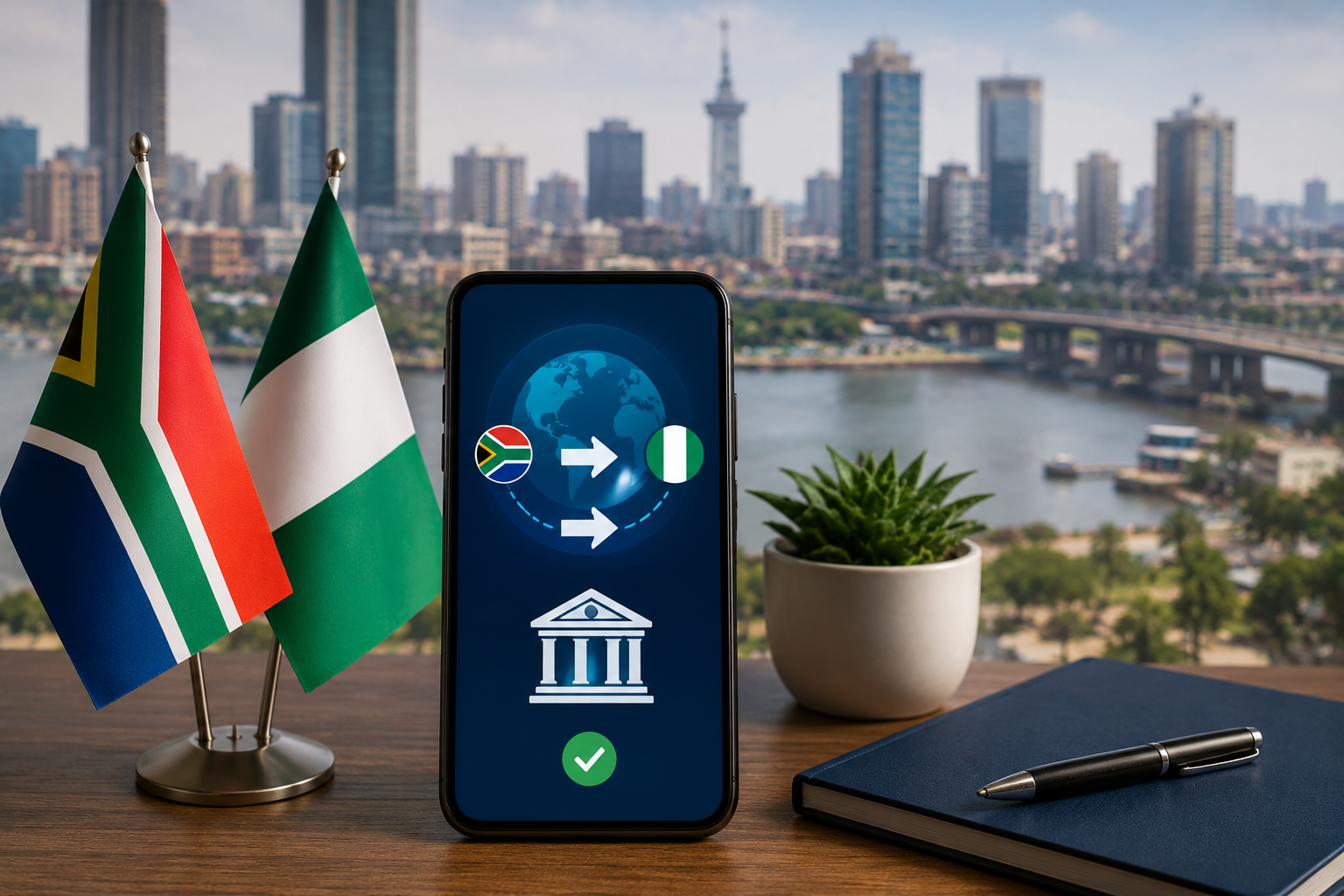
The recent partnership between PesaLink and PAPSS illustrates this direction. In February 2026, PesaLink and PAPSS announced a connection between more than 80 PesaLink network participants and more than 160 PAPSS participating banks, enabling instant 24/7 cross-border payments into Kenya in local currencies. That's a significant development because the user doesn't necessarily need to understand the underlying infrastructure. They simply need: Send → settle → receive.
Why Cross-Border Payments Matter for Financial Inclusion
Financial inclusion should not stop at national borders. African workers, students, families and businesses increasingly operate across countries.
A Kenyan freelancer may work for a Nigerian company. A Ugandan family member may receive money from Kenya. A Ghanaian business may purchase goods from Nigeria. A South African company may hire developers in Kenya. These transactions create demand for cross-border digital payments.
If domestic payments are instant but international payments remain slow and expensive, the financial system remains fragmented. That is why cross-border interoperability is becoming an important part of Africa's digital-payment story.
--- Read more: How Digital Finance Is Expanding Financial Inclusion in Africa
Digital Remittances Are Already Changing
Remittances provide another example. The World Bank's Findex data shows that Kenya and South Africa have roughly 70–80% of remittance senders and recipients transacting digitally, demonstrating how digital channels are increasingly replacing cash-based methods in important corridors.
This is important for financial inclusion because remittances often represent a major source of income for households. When recipients receive funds digitally, they can potentially:
- Store money electronically - Pay merchants - Pay bills - Transfer funds - Save - Access other financial products The remittance therefore becomes an entry point into the broader digital financial system.
Digital Payments Can Help Women Access Financial Services
Financial inclusion isn't only about the number of accounts. It is also about who controls and uses those accounts. The World Bank's 2025 Findex data shows that the gender gap in account ownership remains an important issue globally, while digital financial services can help expand access among women.
In Kenya, for example, 86.5% of women had an account in 2024, compared with 90.1% across all adults. That still leaves a gap. But it also demonstrates how far the country has moved toward broad-based financial access.
Digital payments can be particularly valuable when they give people direct control over an account rather than requiring another household member to act as the financial intermediary.
Digital Finance Is Also Changing Savings
Payments are only one piece of the transformation. Digital accounts are increasingly being used for saving as well. The World Bank found that 35% of adults in Sub-Saharan Africa saved formally in 2024, an increase of 12 percentage points from 2021.
Mobile money is part of that trend. In Sub-Saharan Africa, 23% of adults saved using mobile money in 2024, according to the World Bank's analysis. That matters because saving is a foundation for financial resilience.
A person with a digital account can potentially move money into savings without physically travelling to a bank. The same infrastructure can support: Payments → savings → credit → insurance → investment.
Digital Payments Can Improve Government Payments
Governments are also becoming important users of digital payment infrastructure. Digital government payments can include: - - Social transfers - Pensions - Public-sector wages - Subsidies - Emergency assistance
The World Bank found that 75% or more of government-payment recipients in Kenya and South Africa received payments into an account, compared with lower rates in Mali and Senegal. Digital government payments can reduce some of the risks associated with cash distribution. They can also create accounts for people who previously had limited interaction with formal financial institutions.
But Digital Finance Creates New Risks
Digital payments solve problems. They also create new ones. As more money moves digitally, the risks become increasingly digital too. These include:
- Fraud
- Identity theft
- SIM swapping
- Account takeover
- Phishing
- Data breaches
- Unauthorized transactions
- Consumer-protection failures
The World Bank's 2025 Findex introduced global data on digital safety and found that among the 4 billion adults in low- and middle-income economies who own a mobile phone, only around half use a password to protect the phone. That is a huge security gap.
Financial inclusion therefore cannot simply mean: “Give everyone a digital account.” It must also mean: “Give people the tools and knowledge to use that account safely.”
Africa's Fintech Industry Is Expanding Around Payments
Digital payments have also created an enormous opportunity for African fintech companies. The Financial Times reported in June 2026 that a Boston Consulting Group study projected African fintech revenues could reach $65 billion by 2030, approximately 13 times their level a decade earlier.
That growth is not happening because Africa needs another generic payment app. It is happening because the underlying financial problems remain significant. Fintech companies are increasingly working on:
- Payments - Credit - Insurance - International transfers - Merchant services - Business banking - Financial infrastructure The industry is moving from simply digitizing transactions toward building complete financial ecosystems.
The Next Stage: From Digital Payments to Digital Financial Infrastructure
The first stage of Africa's payment transformation was: Digitize money. The next stage is: Connect the systems. The third could be: Build financial services on top of the data and infrastructure created by those systems.
That means a merchant payment could eventually connect to: Accounting → credit → insurance → inventory financing. A consumer payment could connect to: Savings → investment → insurance. A cross-border payment could connect to: FX → settlement → treasury management.
This is where digital payments become much more than a replacement for cash. They become financial infrastructure.
What Africa Needs Next
The continent has already made extraordinary progress. But several challenges remain.
- Interoperability - Payment systems need to communicate across banks, fintechs, mobile-money providers and countries.
- Consumer protection - Digital finance needs strong mechanisms for resolving fraud and unauthorized transactions.
- Cybersecurity - The financial system becomes more vulnerable as more transactions move online.
- Digital identity - Reliable identity systems can make onboarding easier while strengthening compliance.
- Affordable connectivity - Digital financial services are only useful when people can reliably access the underlying mobile and internet infrastructure.
- Cross-border settlement - Domestic digital payments are not enough for an increasingly integrated African economy.
- Financial literacy - Users need to understand both the opportunities and risks of digital finance.
Africa's Digital Payment Opportunity Is Still Enormous
The most important thing about the numbers is not simply how much progress has already been made. It is how much remains to be digitized.
Sub-Saharan Africa has moved from 23% account ownership in 2011 to 58% in 2024. Kenya has moved from 42.3% to 90.1% over the same period. Yet cash remains deeply embedded in many economies.
That means the next decade could see another enormous wave of digital adoption. The opportunity is no longer simply to bring people into the financial system. It is to make the financial system:
- Faster.
- Cheaper.
- More interoperable.
- More secure.
- More accessible.
Conclusion
Africa has already demonstrated that financial technology can leapfrog traditional infrastructure. Mobile money transformed how millions of people send, receive and store money.
Digital accounts are becoming mainstream. Instant-payment systems are spreading. Fintech companies are building new financial products. And regional payment infrastructure is beginning to connect domestic systems across borders.
The numbers tell the story. 58% of adults in Sub-Saharan Africa had an account in 2024. 40% had mobile-money accounts. 35% saved formally. 89.3% of Kenyan adults made or received digital payments. 87.5% of Kenyan adults had mobile-money accounts. Nearly half of African Union member states have implemented instant-payment systems.
But financial inclusion is not finished. The next challenge is to connect these systems and ensure that digital finance works for consumers, merchants, workers and businesses across borders. Africa's payment revolution therefore isn't ending. It is moving from access to interoperability. And the companies that build the infrastructure connecting Africa's digital financial ecosystem may become just as important as the companies that pioneered mobile money.