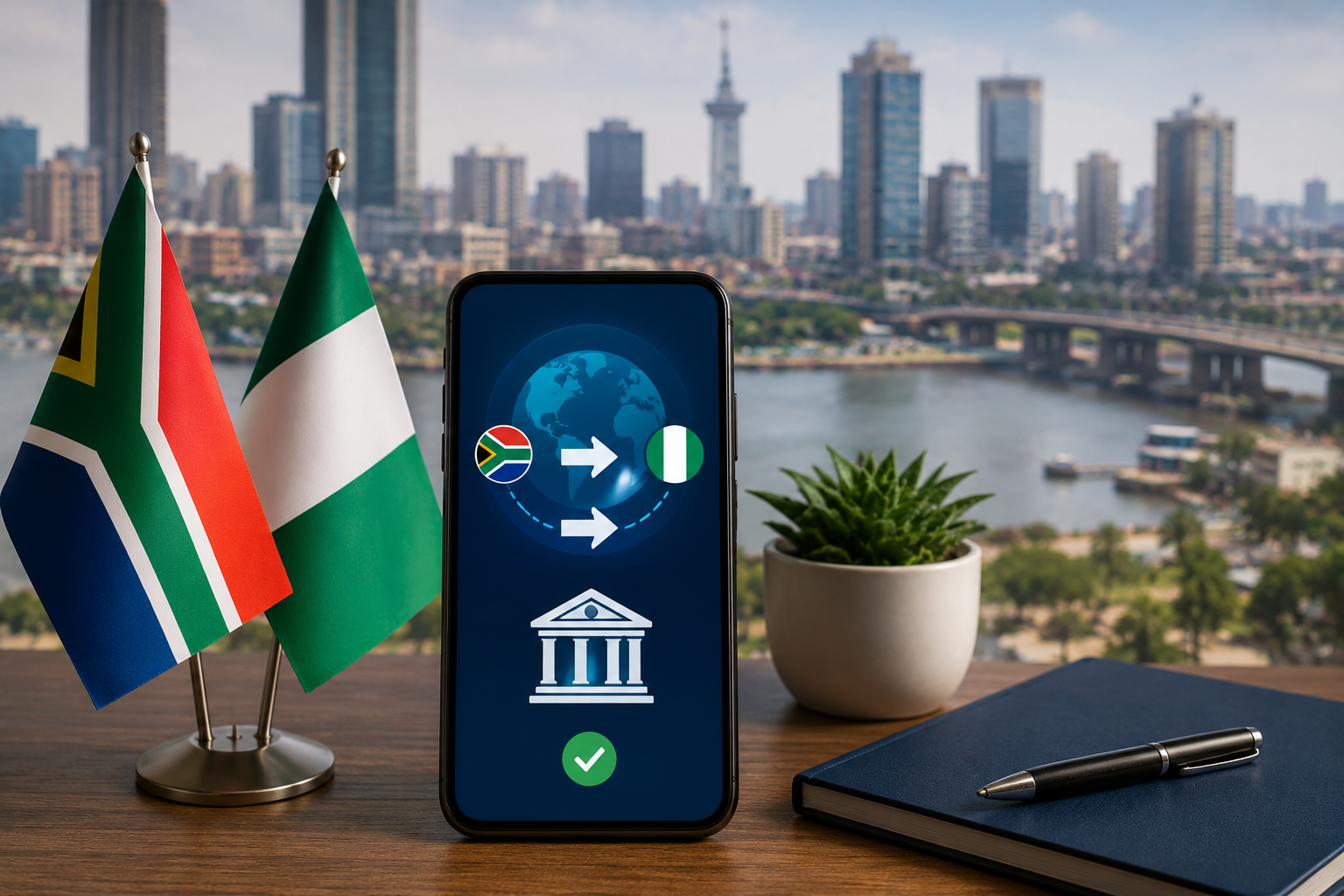
Why Africa Needs Better Cross-Border Payment Infrastructure
Africa has built powerful payment networks, but fragmented currencies and financial systems still make cross-border payments costly and complex. Explore why better interoperability could connect banks, mobile money, fintechs, and blockchain-based settlement across the continent.

On this page
Africa does not necessarily need another payment app. It needs better infrastructure connecting the payment systems that already exist.
Across the continent, consumers and businesses can already access banks, mobile-money services, fintech platforms, card networks and increasingly sophisticated instant-payment systems. Yet moving money from one African market to another can still involve multiple intermediaries, different currencies, fragmented regulatory systems and expensive foreign-exchange processes.
The problem is therefore not simply a lack of payment options. It is fragmentation. And as African economies become more digitally connected, solving that fragmentation will become increasingly important.
Africa Has Built Remarkable Payment Infrastructure
The starting point should not be underestimated. Africa has already demonstrated that financial infrastructure can leapfrog traditional models.
Mobile money is perhaps the clearest example. According to GSMA, Sub-Saharan Africa had more than 1.1 billion registered mobile-money accounts in 2024, processing approximately $1.1 trillion in transactions. The region accounted for nearly 65% of global mobile-money transaction value.
Those numbers are extraordinary. Mobile money is no longer simply a way for individuals to send money to family members. It is increasingly embedded in merchant payments, business operations, payroll, working capital and supply-chain activity.
And the broader industry continues to grow. GSMA reported that global mobile-money transactions exceeded $2 trillion in 2025, doubling from the $1 trillion threshold reached only four years earlier. . Africa therefore does not need to start from scratch. It needs to connect what already works.
The Problem Is Fragmentation
Imagine a business operating across Kenya, Uganda, Tanzania, Nigeria and Ghana. Each market may have:
- Its own currency - Its own banking infrastructure - Its own payment providers - Its own foreign-exchange market - Its own regulatory requirements - Its own settlement processes A payment that appears simple to the customer can become complicated behind the scenes.
A Kenyan company paying a supplier in Nigeria or Togo may need to convert KES into another currency, interact with financial institutions in multiple jurisdictions, navigate compliance requirements and ultimately ensure that the recipient receives usable local currency.
The more intermediaries involved, the more opportunities there are for delays, fees and reconciliation problems. This is where infrastructure becomes more important than the individual payment application.
Cross-Border Payments Remain Expensive
The cost problem is not theoretical. The World Bank's Remittance Prices Worldwide database reports that the global average cost of sending money was 6.36% as of its latest August 2025 update.
Sub-Saharan Africa has historically been more expensive. World Bank data for Q2 2024 put the average cost of sending a $200 remittance to Sub-Saharan Africa at 8.37%, up from 7.73% in the previous quarter. That means that on a $200 transfer, an average cost of 8.37% represents roughly $16.74.
For someone sending money home regularly, that is not a trivial amount. And for businesses moving larger amounts, foreign-exchange spreads, intermediary fees and settlement costs can become even more significant.
Speed Matters Too
Cost is only one part of the problem. Businesses also need predictability. If a supplier expects payment today but the transfer takes several business days to settle, the delay can affect inventory, payroll, cash flow and the ability to complete another transaction.
In February 2026, Afreximbank announced a partnership between Kenya's PesaLink and the Pan-African Payment and Settlement System (PAPSS) designed to enable instant, 24/7 cross-border payments in local currencies. The arrangement connects more than 80 PesaLink participants with more than 160 PAPSS participating banks.
That development is important because it demonstrates the direction the market is moving toward: real-time settlement, local currencies and interoperability. The infrastructure is becoming more connected.
PAPSS Shows What Interoperability Can Look Like
One of the most important developments in African payments is PAPSS. Developed by Afreximbank in collaboration with the African Union Commission and the AfCFTA Secretariat, PAPSS was created to facilitate cross-border payments in African currencies and support intra-African trade.
By the end of 2024, Afreximbank reported that PAPSS had expanded to 16 central banks and 150 commercial banks, with three additional central banks and 50 commercial banks joining the network during that year.
In July 2025, Bank Al-Maghrib's participation made Morocco the 17th country of presence in the PAPSS network. These developments point toward something much bigger than a payment product. They point toward continental financial infrastructure.
Local Currency Settlement Is Important
For decades, international payments have often depended on major reserve currencies and correspondent banking relationships. That model can work, but it creates additional layers between African economies.
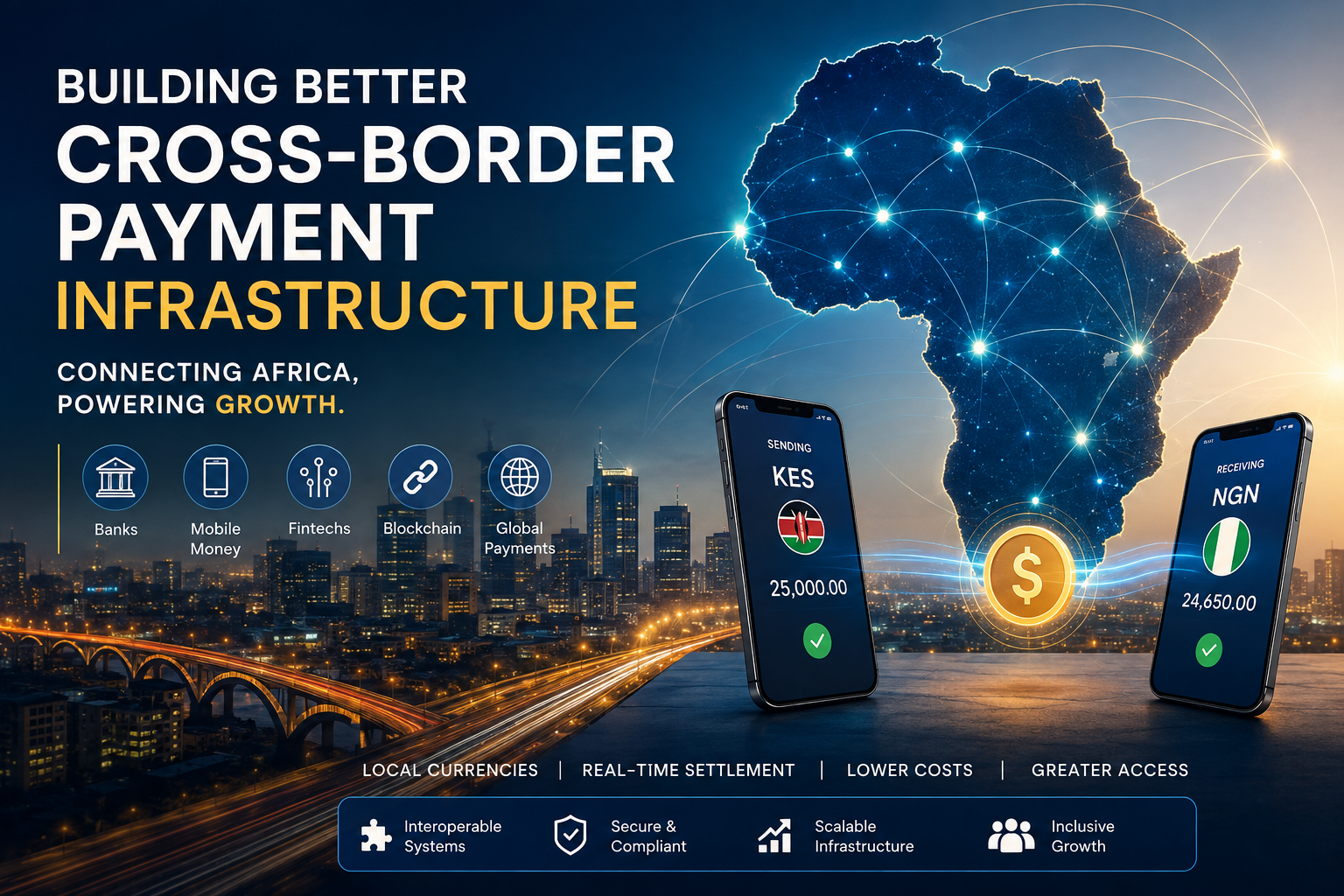
Local-currency settlement offers another possibility. Instead of: Kenyan shillings → U.S. dollars → Nigerian naira, a payment infrastructure can potentially facilitate: Kenyan shillings → Nigerian naira, with the necessary foreign-exchange conversion and settlement handled within the financial infrastructure.
That is one of the reasons PAPSS is strategically important. Afreximbank has described the system as a way to reduce reliance on foreign currencies and make intra-African trade more efficient.
But local-currency settlement has its own challenge: liquidity. It is one thing to connect currencies technically. It is another to ensure there is sufficient liquidity and competitive pricing for businesses that need to exchange them.
Africa's 41 Currencies Create a Difficult Infrastructure Problem
Africa's monetary fragmentation is significant. Afreximbank and PAPSS have highlighted the challenge created by the continent's 41 currencies, diverse regulatory environments and limited currency convertibility.
This creates a mathematical problem as well as an operational one. As the number of currencies increases, the number of potential currency relationships grows rapidly. A payment infrastructure serving dozens of currencies therefore needs:
- 1FX liquidity
- 2Market-making
- 3Settlement infrastructure
- 4Compliance systems
- 5Reliable pricing
- 6Risk management
- 7Reconciliation
This is why building African cross-border payments is fundamentally an infrastructure problem, not simply a user-interface problem.
Stablecoins Introduce Another Settlement Option
Blockchain technology adds another possible layer. Stablecoins can represent dollar-denominated value on blockchain networks and can move continuously across borders.
This does not mean stablecoins should replace African currencies. It means they can potentially serve as a settlement bridge between financial systems. Consider a simplified example: Kenyan shillings → Local payment provider → USDC → Nigerian payment provider → Nigerian naira. The customer may never need to hold USDC.
The stablecoin can operate behind the scenes between regulated payment providers. The International Monetary Fund's 2026 Article IV assessment of Nigeria found that stablecoins had become increasingly important in the country's cross-border crypto activity, accounting for more than 65% of cross-border crypto transactions.
That does not mean every stablecoin transaction represents a legitimate payment. It does, however, demonstrate that dollar-denominated digital assets are already being used at meaningful scale in an African market.
Blockchain Does Not Have to Replace Banks
This is where the conversation often becomes unnecessarily polarized. The future does not have to be: Banks vs. crypto. It can be: Banks + fintech + mobile money + blockchain.
A bank can maintain the customer's account. A mobile-money provider can provide local access. A fintech can provide the user interface. A regulated digital-asset provider can provide blockchain settlement. An instant-payment network can connect domestic financial institutions. A liquidity provider can handle foreign exchange. Each participant performs a different function.
The customer simply sees: Payment sent. That is the infrastructure model I find much more interesting.
The User Should Not Need to Understand the Infrastructure
The best payment infrastructure is often invisible. When someone sends a message through a smartphone, they don't think about the network routing, servers or data protocols underneath it. Payments should eventually work in a similar way.
A Kenyan business should not need to understand correspondent banking to pay a Nigerian supplier. A Ghanaian freelancer should not need to understand blockchain infrastructure to receive an international payment. A Nigerian importer should not need to understand foreign-exchange settlement systems to pay an Asian supplier.
The complexity should live underneath the product. The experience should remain simple.
Compliance Must Be Built Into the Infrastructure
Making payments faster is not enough. A cross-border payment system also has to be safe. That means building compliance into the architecture rather than treating it as an afterthought.
A serious payment infrastructure needs to address:
- Know Your Customer requirements
- Anti-money-laundering controls
- Sanctions screening
- Transaction monitoring
- Fraud prevention
- Foreign-exchange regulations
- Consumer protection
- Data protection
- Licensing requirements
This becomes especially important when multiple financial systems are connected.
A payment that starts in one currency, moves through a digital settlement layer and ends in another currency may involve several regulated entities. The infrastructure needs to know who is sending the money, where it is going and why. Speed without compliance is not innovation. It is risk.
Interoperability Is More Important Than Another Wallet
Africa does not necessarily need thousands of isolated financial applications. It needs systems that can communicate.
A wallet that only works within one ecosystem has limited usefulness. A payment network that cannot interact with banks has limited usefulness. A bank that cannot efficiently connect to digital payment infrastructure creates friction. The greatest opportunity may therefore be the layer that sits between these systems. That is where interoperability becomes valuable.
Imagine a future where a user can fund a transaction through a bank account, mobile-money wallet or card, while the recipient can receive local currency through their preferred financial institution. The underlying settlement route could change depending on:
- Cost
- Speed
- Liquidity
- Currency
- Regulatory requirements
- Availability
The customer does not need to know which route was selected. The infrastructure does.
Cross-Border Commerce Needs This Infrastructure
The opportunity is particularly large for African businesses. The African Continental Free Trade Area is designed to increase trade between African countries, but trade cannot scale efficiently without financial infrastructure capable of supporting it.
Afreximbank estimated Africa's trade-finance gap at approximately $100 billion, highlighting the broader financing constraints facing businesses engaged in international commerce.
Payments are only one part of that problem. But better payment infrastructure can help businesses manage working capital, settle suppliers, receive revenue and participate in regional markets more efficiently. A small business should not have to become a payments expert simply because it wants to sell across a border.
Mobile Money Can Become Part of the Global Payment Stack
This is particularly important for Africa. Mobile money already operates at extraordinary scale. The opportunity is not to replace it with blockchain. The opportunity is to connect it.
A future payment could look like: U.S. customer → Global payment provider → Digital settlement network → African payment provider → Mobile money → Recipient.
The recipient sees money arriving in a familiar wallet. The technology connecting the two sides can be much more sophisticated. That is the kind of infrastructure that could make global payments feel local.
The Next Generation of Payment Infrastructure Will Be Hybrid
I believe the most successful African payment systems will be hybrid. They will combine the strengths of several technologies rather than insisting that one technology solve every problem.
Mobile money provides reach. Banks provide regulated financial accounts and institutional infrastructure. Instant-payment networks provide domestic and regional connectivity. FX markets provide currency conversion. Stablecoins can provide another settlement mechanism. Blockchain networks can provide programmable, continuous settlement. Compliance technology provides the controls necessary to operate safely.
None of these technologies has to disappear. They simply need to become better connected.
What This Means for Finlazo
This is also the philosophy behind what we are building at Finlazo. We do not see the future of African finance as a choice between traditional financial infrastructure and cryptocurrency. We see an opportunity to connect them.
A user should be able to interact with familiar payment methods while the underlying infrastructure determines the most efficient way to move and settle value. That could mean: Mobile money for local access, banks for fiat accounts, blockchain for digital settlement, stablecoins for cross-border liquidity, local payment networks for domestic distribution, and compliance infrastructure protecting the entire flow.
The technology should serve the payment—not the other way around.
The Bigger Opportunity Is Infrastructure
The next major African fintech company may not necessarily be the company with the most attractive wallet. It may be the company that makes different financial systems work together.
That is a much harder problem. It requires technology. It requires liquidity. It requires regulatory relationships. It requires compliance. It requires banking and payment partnerships. It requires reliable settlement. And above all, it requires trust.
But solving that problem could unlock enormous economic value.
Africa Does Not Need to Start Over
One of the most exciting things about African financial technology is that the continent already has many of the building blocks.
It has:
- One of the world's largest mobile-money ecosystems
- Growing instant-payment infrastructure
- Expanding fintech markets
- Pan-African payment initiatives
- Increasing digital-asset adoption
- A rapidly growing digital economy
The missing piece is increasingly connectivity between these systems. That is where the next phase of innovation can happen. Not necessarily by replacing what already works. But by making what already works work together.
The Future of African Payments Will Be Connected
Africa's cross-border payment problem is not simply that payments are too slow. It is that the financial systems underneath those payments remain fragmented.
The answer will not come from one technology alone.
PAPSS is demonstrating how local-currency payment infrastructure can connect African financial institutions. Mobile money has already created a massive digital financial layer. Stablecoins are introducing another potential mechanism for cross-border settlement. Banks remain essential to regulated financial infrastructure. Fintech companies are increasingly connecting these systems to users and businesses.
The next challenge is to make these pieces work together seamlessly. That is the real infrastructure opportunity.
The Bottom Line
Africa does not need to choose between banks and blockchain. It does not need to choose between mobile money and digital assets. It does not need to choose between local currencies and global settlement networks. It needs infrastructure that allows these systems to communicate.
The continent has already built remarkable payment networks. The next chapter is about connecting them—making cross-border payments faster, more transparent, more accessible and more useful for the businesses and people who depend on them.
The future of African payments will not belong to the technology that replaces everything else.
It will belong to the infrastructure that connects everything together.